


How to Apply Foundation: A Step-by-Step Guide to a Flawless Base
If your foundation is disappearing by midday, settling into fine lines, or feels like it’s sitting on the skin rather than blending in, there’s usually a disconnect between how you’re applying foundation – and what your skin really needs.
Every complexion behaves differently, and what looks effortless on one person can appear heavy or uneven on another. That’s why learning how to apply foundation starts with understanding your skin – then choosing the formula, tools, and technique to match.
But how do you do all that? Bianca Downward, National Makeup Artist at YSL Beauty, explains more.
“A flawless base is never about coverage – it’s about couture-level preparation. First, you’ll need to hydrate intentionally to create luminosity from within. Second, prime strategically based on skin concern – not habit. Third, apply foundation in sheer, styled layers – think fabric layering, not masking. Fourth perfect with precision using concealer only when needed, and finally, set selectively – skin should still breathe and reflect light.”
Below, we’ll unpack Bianca’s insights in more detail – walking you through how to apply liquid foundation, as well as how to apply powder foundation and cream formulas to build a base your makeup can rely on.
Step 1: Prep and prime your skin
One of the most important steps in how to put on foundation happens before makeup even touches your face.
Foundation applies best when skin is hydrated and clean. A clear surface allows product to spread evenly, helping it sit consistently without catching on dry areas or texture.
To prepare your skin for foundation:
- Cleanse with a gentle face wash and toner.
- Moisturise, then wait one or two minutes for the skin to absorb the product.
- Apply primer to create a consistent base for your foundation.
Looking for the right primer to begin your routine? Our Touche Éclat Blur Primer Gold uses light-infused particles in a sheer gel texture to soften the look of pores and fine lines, helping foundation apply smoothly and stay in place throughout the day.
Step 2: Choose your foundation formula
The formula you choose directly affects how you’ll apply your foundation – and how it will look throughout the day. Consider the texture and level of coverage you want, as well as factors specific to you like your skin type. Together, these will help determine which option will suit your needs best.
Foundation formulas vary by texture and wear:
• Liquid foundations: water-based and suitable for most skin types – particularly dry skin – liquid foundations spread easily and tend to feel lighter on the skin. One example? Our All Hours Liquid Foundation, which is formulated with hyaluronic acid to support moisture levels as the base sets, helping you maintain a dewy finish.
• Cream foundations : these have a thicker texture and offer buildable medium-to-full coverage. Cream foundations sit smoothly on the skin and are well suited to those who prefer a fuller look. Our pick here is the Touche Éclat Glow-Pact, which creates a silky layer across the face – allowing coverage to build, without feeling heavy.
• Powder foundations : ideal for oily skin types and those who prefer a quick, low-fuss application, powder foundations – such as our All Hours Hyper Finish – are designed to blend easily and feel breathable on the skin. Formulated with hyaluronic acid and niacinamide, the All Hours Hyper Finish helps you avoid the dry, cakey appearance often associated with powder foundations, and feel confident throughout the day.
Alongside formula, shade selection matters. Your foundation should match your undertone – warm, cool, or neutral – while aligning with your preferred finish.
Not sure what your shade is? Find the right foundation match for your skin tone with us.
Step 3: Match the tool to the formula
The same foundation can look completely different depending on how it’s applied. That’s why, when understanding how to put on foundation properly, it’s crucial to select the right tools and techniques for the job.
Read on – below, we’re exploring the different ways to control the coverage and finish of your foundation, and how to use each method to create your desired look.
Brushes
For building coverage, brushes work well with liquid, cream, and powder foundations. They give you more control around detail areas like eyeshadow and lipstick, helping you create an even base that still supports a glowing skin finish.
How to apply foundation with a brush:
- Dispense foundation onto the back of your hand.
- Lightly coat the tips of the brush with product.
- Apply foundation to the centre of the face using a gentle patting motion.
- Blend outward toward the edges using light tapping movements.
- Blend along the jawline and down the neck to avoid visible lines.
Beauty sponges
Beauty sponges work well with liquid and cream formulas when you want coverage that feels light and natural. Pressing product into the skin helps foundation blend in seamlessly, making this a go-to method for achieving a no-makeup makeup look.
How to apply foundation with a beauty sponge:
- Wet the sponge thoroughly, then squeeze out excess water so it remains damp.
- Dispense foundation onto the back of your hand.
- Dab the sponge into the product.
- Apply foundation to areas that need the highest coverage, starting at the centre of the face.
- Blend using small dabbing motions, moving from larger areas to smaller ones like the nose and under the eyes.
Fingers
Fingers work well with liquid and cream foundations when light coverage and a glass-skin finish are the goal. The warmth of your hands helps the formula blend directly into the skin, allowing the base to settle.
How to apply foundation without a brush:
- Start with clean hands.
- Warm the foundation between your fingertips.
- Pick up product with your index or middle finger.
- Dot foundation across the T-zone.
- Press and blend outward using light pressure.
Step 4: Use concealer strategically
Concealer provides targeted coverage for areas that need more correction than foundation alone. Typically applied in a shade slightly lighter than foundation to help brighten specific areas, you can apply concealer to:
• Under eyes: start at the inner corner and blend upward toward the temple.
• Blemishes and spots: apply directly, then lightly blend the edges with a small brush or fingertip.
• T-zone: small dots at the centre of the forehead and chin add subtle brightness.
• Cheekbones: apply along the cheekbone and blend upward to enhance structure.
For a concealer that offers a creamy, creaseless finish, don’t look beyond our All Hours Concealer. Formulated with glycerin, its hybrid formula suits all skin types, while the tapered applicator allows precise placement.
Step 5: Lock your foundation in place
Setting spray is often overlooked, yet it plays an important role in helping makeup last all day. Rather than adding weight, it helps secure your foundation while allowing the skin to remain flexible. This final step reduces transfer and supports consistent wear once your makeup has settled.
Our Top Secrets Setting Spray delivers an ultra-fine mist that layers evenly over makeup, so you can build it up without drenching your skin or shifting your foundation. Formulated with hyaluronic acid to support hydration and glycerin to keep your base looking cohesive, it sets makeup without stiffness and works as a refreshing touch-up mist throughout the day.
How to apply foundation matters, but so does the formula. Next, learn which foundations work best for oily, dry, and combination skin.
SHOP MAKEUP
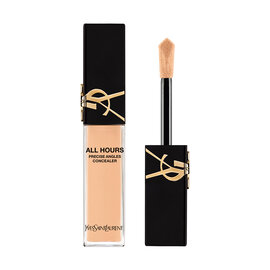
ALL HOURS CONCEALER
24H* FULL WEAR – FEELS BARE – LONG CARE
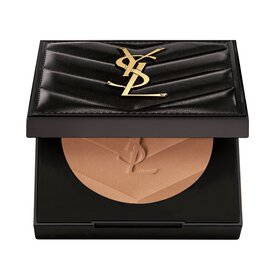
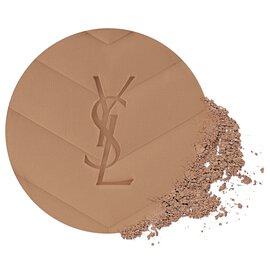
ALL HOURS HYPER FINISH
THE NEW COUTURE MULTI-USE MATTE POWDER. MATTIFY AND SET COMPLEXION FOR 24H.


Touche Eclat Glow-Pact Cushion Foundation
Cream foundation - High coverage - Long lasting


